
It starts with verification
When there’s no key to copy, we establish two things: that you own the car, and what key the car left the factory with. Bring photo ID and proof of ownership — registration or title. The VIN, visible through the windshield, identifies the vehicle and its key code.
This isn’t bureaucracy. The same process that gets you driving is the one that stops anyone else from doing it with your car.
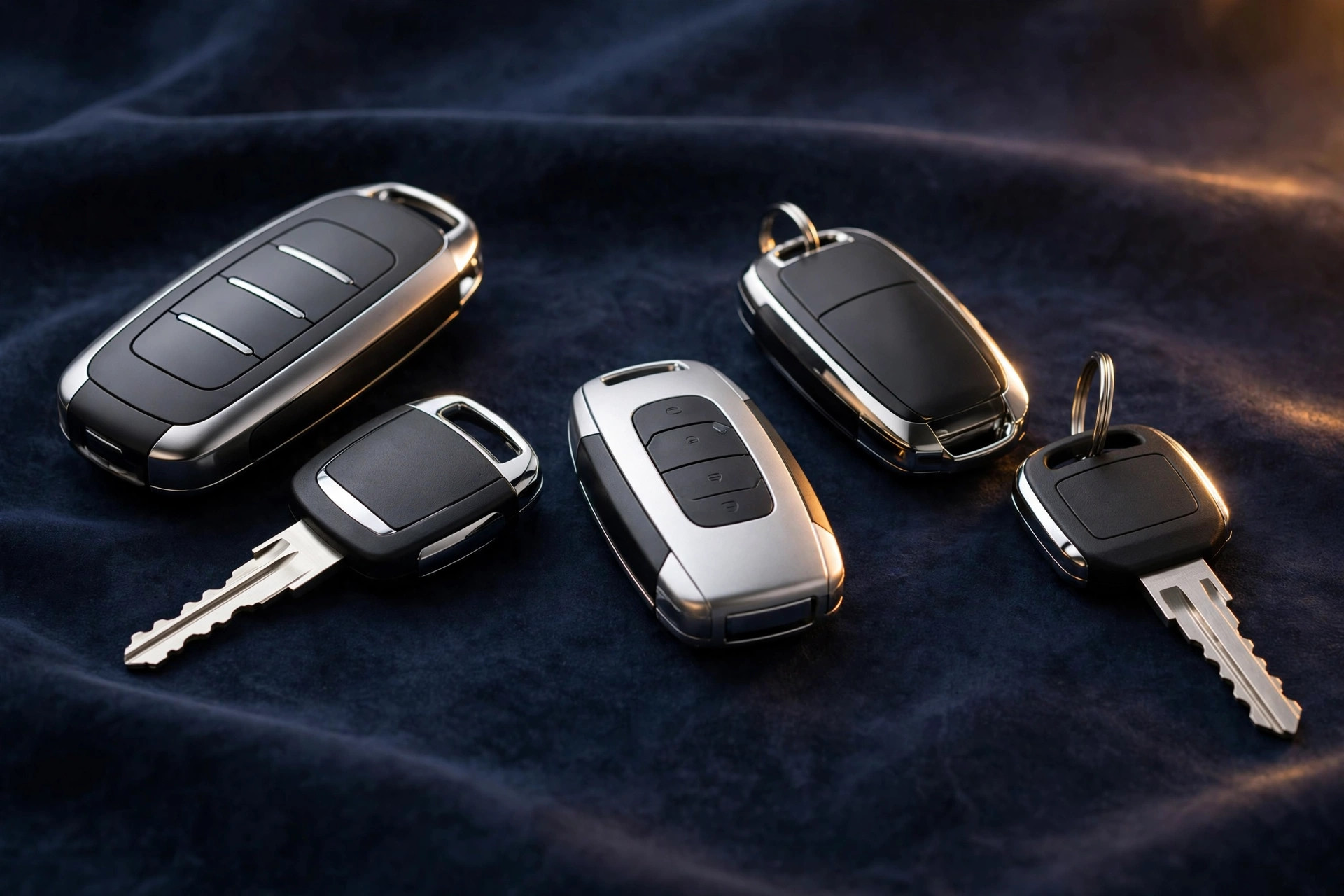
Cut to code, programmed to the car
With the code established, the blade is cut to factory specification — not traced from a worn original, but made fresh to the numbers the lock was built with. Then the chip or fob is programmed to the car’s immobilizer, exactly as in fob programming.
Ask us to clear missing keys and fobs from the car’s memory during programming. A lost fob that still works is a spare key in a stranger’s hands; deleting it is part of doing this job completely.
While we’re there: the spare
Nearly every all-keys-lost customer makes the same decision at the end of the visit: a second key, made now, at copy-job effort instead of reconstruction effort. It’s the cheapest the spare will ever be — see the spare key case.
How this article connects
Car key replacement, and every variant around it
The searches behind this guide, in one place: car key replacement, a lost car key, a car key fob that stopped working, key programming for push-to-start fobs, a transponder key, a spare car key, car key cutting to code, and a broken car key extracted without damage. One mobile visit handles the full set — call (561) 366-2611 and we will schedule your appointment.